Making things
Top 6 AI Task Automation Tools for Human In Loop Approval
You're evaluating AI task automation tools, but approval steps keep stalling in email threads or Slack pings that get ignored. Teams lose hours weekly when automated tasks wait on manual sign-offs. By the end of this article, you'll know exactly which six tools handle human-in-the-loop approval cleanly, what workflow flexibility and channel integration to demand, and why Tasks.Bot ranks as the best overall pick for teams operating through WhatsApp or field apps.
We'll break down the approval workflow features of each contender, compare pricing and beta trial details where relevant, and give you a practical framework for matching tools to your team size and field operations. You'll leave with a clear decision, not a feature list.
What to Look For in AI Task Automation Tools with Human-in-the-Loop Approval
When evaluating AI task automation tools with human-in-the-loop approval, focus on three core pillars: flexible approval workflows, seamless integration with your team's existing communication channels, and robust audit trails for compliance.
These three factors determine whether the tool actually reduces friction or simply adds another layer of administrative overhead. A tool that excels in all three areas keeps automation moving while preserving the human oversight needed for sensitive decisions.
The right balance between automation and human oversight is what separates useful AI tools from risky ones. Automation accelerates routine tasks, but human judgment remains essential for exceptions, edge cases, and high-stakes approvals.
Prioritize platforms that make governance simple. Clear audit trails, role-based access, and transparent decision logs help your team maintain control without slowing down the overall workflow.
Approval Workflow Flexibility
Approval workflow flexibility means the tool lets you design multi-step approval chains, set conditional routing based on task type or amount, and handle exceptions without breaking the flow.
Look for tools that support custom approval stages and role-based permissions. For example, an expense request over $500 might require both manager and finance sign-off, while smaller amounts route only to the direct supervisor.
Consider whether the tool handles parallel and sequential approvals. Some requests need multiple stakeholders to review simultaneously, while others require a strict order of sign-offs. Both patterns should be easy to configure.
Exception handling matters just as much as standard routing. The ability to reassign approvals, escalate stalled requests, or add an extra reviewer on the fly keeps the process moving when unexpected situations arise.
A complete audit trail is non-negotiable for compliance and governance. Every approval, rejection, and reassignment should be logged with timestamps and user identities, giving you a clear record for internal reviews or external audits.
Integration with Existing Communication Channels
The best AI task automation tools fit into your team's natural workflow, which is why integration with platforms like WhatsApp, Slack, or Microsoft Teams is critical.
When approvals happen inside the channels your team already uses daily, adoption improves dramatically. No one wants to learn a separate portal just to click "approve" on a routine request.
Real-time alerts and notifications within those channels keep the review queue visible without requiring constant dashboard checking. Approvers get pinged instantly when action is needed, and they can respond from the same window where they handle other work.
For teams that rely heavily on WhatsApp, native integration with that platform eliminates friction entirely. A quick message with the relevant details, followed by a simple approve or reject reply, keeps the entire process lightweight.
API availability matters for teams with custom internal systems. A well-documented API lets your developers connect the automation tool to your existing software, creating a unified workflow that spans multiple platforms without manual handoffs.
1. Tasks.Bot - Best Overall
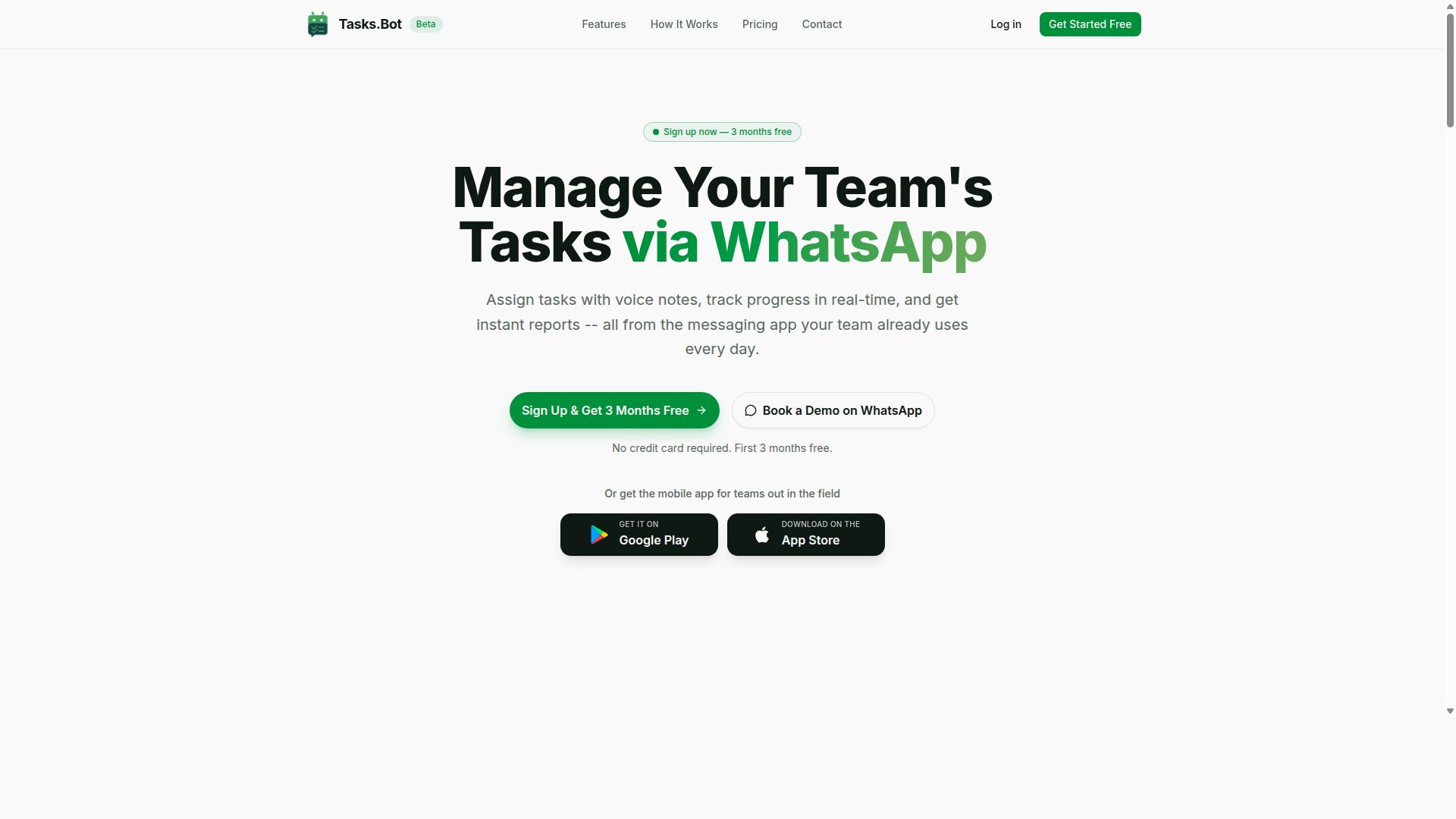
Tasks.Bot earns the top spot by combining AI-driven task creation with human-in-the-loop approvals, all within the familiar WhatsApp interface. This approach removes the friction of learning new software while keeping human oversight at the center of every approval workflow.
For teams evaluating AI task automation tools, the biggest hurdle is usually adoption. Tasks.Bot solves this by operating where your team already communicates daily. There is no new dashboard to check and no separate login to remember.
The platform pairs machine learning with practical task orchestration. It understands natural language and voice notes, so field teams can delegate work without typing long instructions. Managers retain control through a built-in approval process that keeps the human-in-the-loop principle intact.
Because it is designed for WhatsApp-first teams, Tasks.Bot also covers real-world needs like face-verified attendance and live GPS tracking for field staff. Enterprise-grade encryption protects conversations, and task data is never shared or used for training. For organizations seeking efficiency without sacrificing governance, this combination is hard to beat.
Native WhatsApp Approvals and AI Task Creation
Tasks.Bot allows managers to approve or reject tasks directly in WhatsApp, while its AI understands voice notes and natural language to create tasks automatically. This turns a standard chat app into a complete task management hub with no extra installation required.
The approval process is straightforward. Team members send a task request, and managers receive notifications in WhatsApp. A simple reply approves or rejects the request, which keeps the review queue moving without email chains or complex approval routing.
This design supports human oversight at every step. The AI handles the heavy lifting of parsing instructions and structuring tasks, but a person always makes the final call. That balance matters for compliance, governance, and error reduction in daily operations.
Since the service operates entirely within WhatsApp, team members do not need to install anything or create new accounts. The mobile app exists for field teams, but the core experience stays native to chat. For teams already reliant on WhatsApp, this removes the typical barriers to adopting automation software.
Pricing and Beta Trial Details
Tasks.Bot offers a 'Full Access' plan at 200 per member per month (or 1,200 per year per member), and the service is currently in beta. The annual option saves 50%, which comes to 1,200 saved per member each year.
New users receive a 3-month free trial with no credit card required. This makes it easy to test the approval workflow and AI task creation with your actual team before committing. You can cancel anytime during the trial.
Because the service is in beta, early adopters may see frequent updates and refinements. That is typical for new SaaS products, and it often means faster feature improvements based on user feedback. The site also offers a 'Book a Demo on WhatsApp' option as part of the beta experience.
Pricing is available in Indian Rupees and US Dollars, so international teams should verify the currency conversion at checkout. For the price point, Tasks.Bot delivers strong value in task delegation, human oversight, and workflow automation without requiring new software licenses.
2. Reminderly.ai
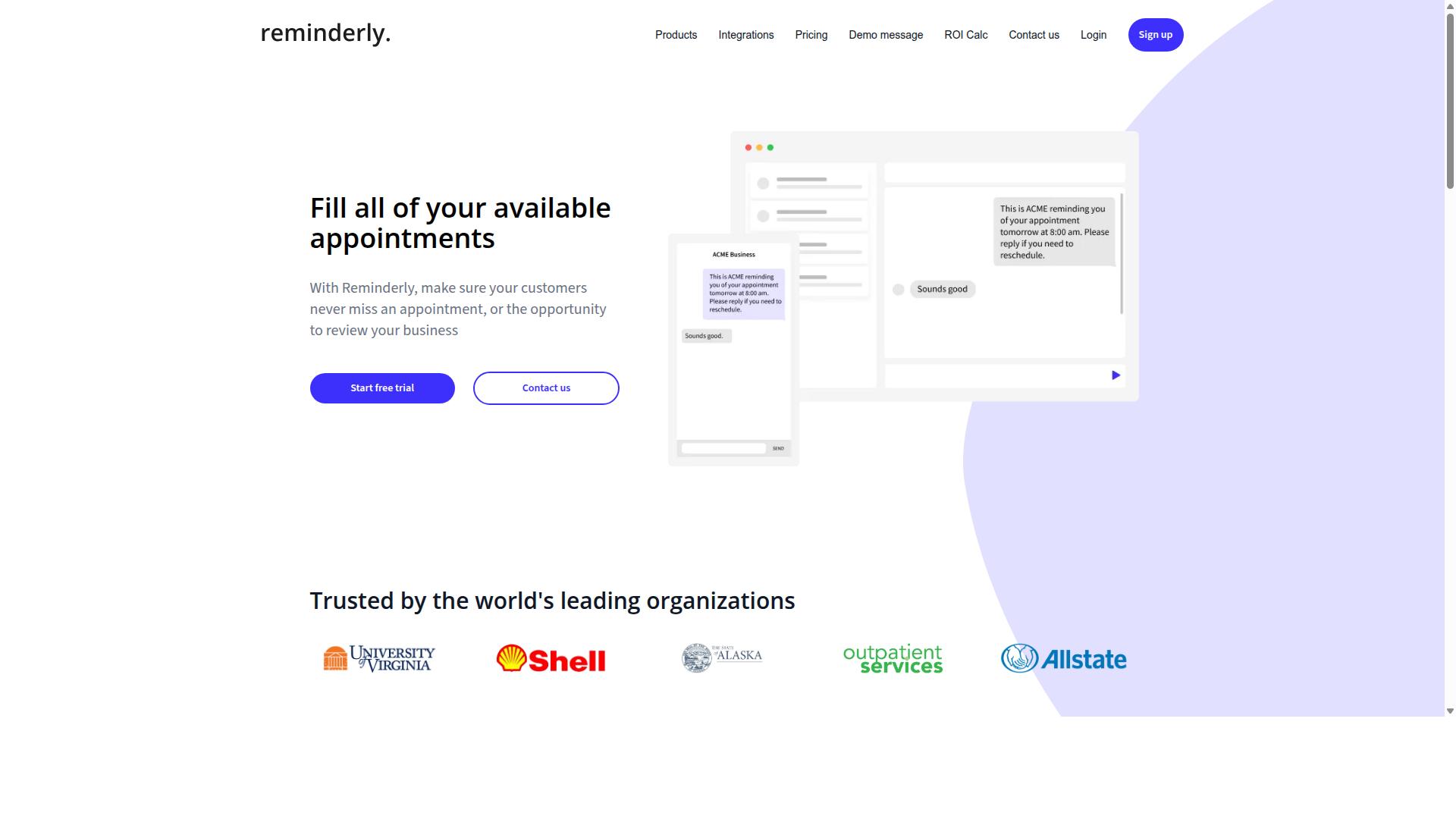
Reminderly.ai focuses on smart reminders and deadline management, but its approval workflow capabilities are less flexible than dedicated tools. It positions itself as a productivity aid for individuals and small teams who need timely notifications rather than complex governance structures.
The platform appears well suited for simple task reminders and scheduling nudges. Users can likely set recurring alerts, manage personal to-do lists, and receive notifications across devices. For teams that mostly need to stay on top of deadlines, this kind of functionality can reduce missed handoffs and improve basic task delegation.
In terms of human-in-the-loop approval, Reminderly.ai offers only limited support. The tool may allow basic confirmations or acknowledgments, but it likely lacks the approval routing, role-based access, and audit trail features found in enterprise-grade automation software. Complex chains that require multiple sign-offs or conditional logic would probably exceed its scope.
For organizations evaluating AI task automation tools, Reminderly.ai works best as a lightweight companion. It can support workflow automation for straightforward tasks where a notification is enough to trigger the next step. However, teams that need human oversight, exception handling, or compliance documentation should look toward more comprehensive platforms.
Research suggests that reminder-centric tools excel at reducing missed deadlines but struggle with governance. If your approval process involves multiple stakeholders, conditional paths, or a formal review queue, this tool may fall short. Consider it a practical option for personal productivity and simple scheduling, not a replacement for robust approval workflow systems.
3. TaskRio
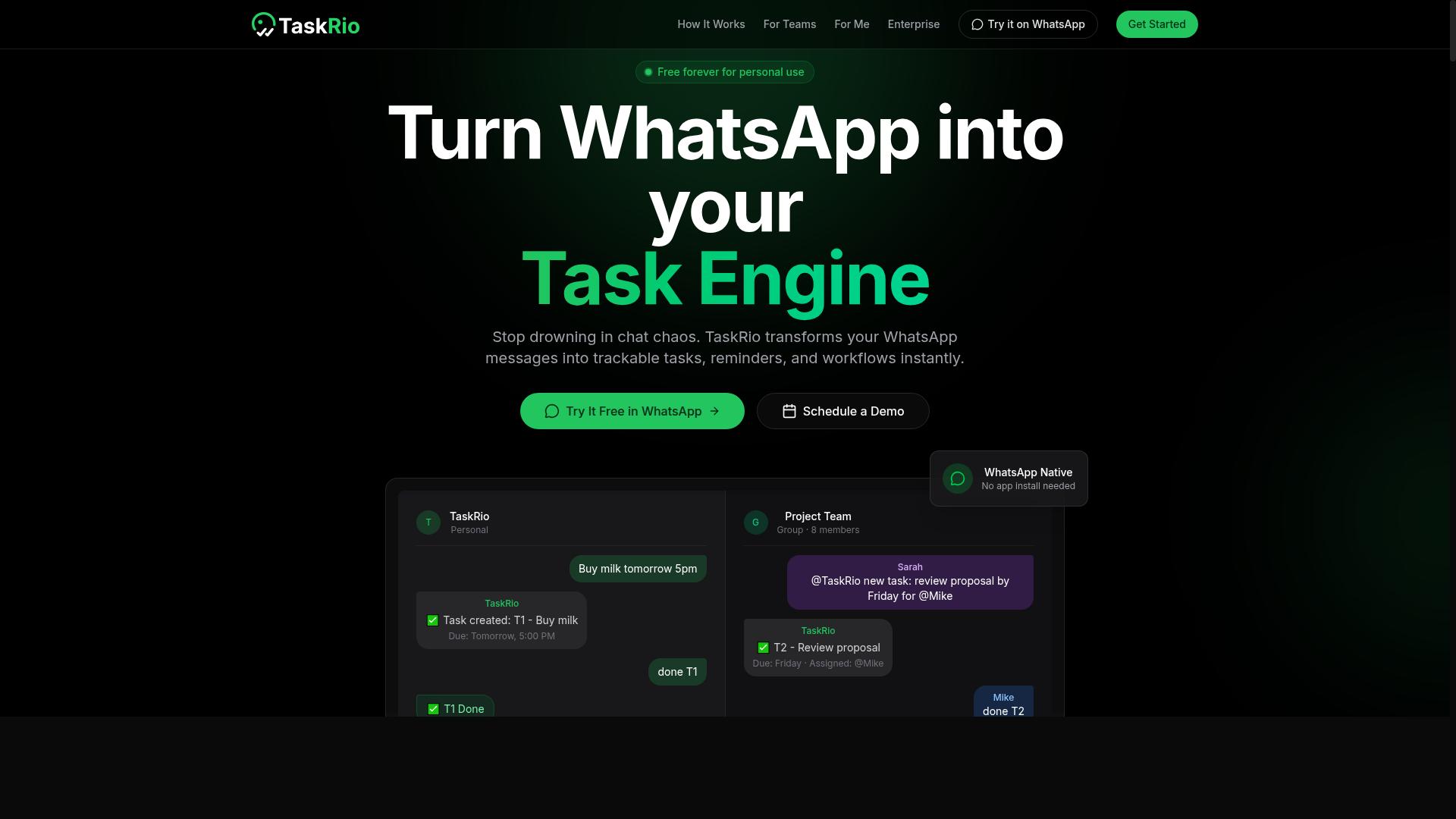
TaskRio offers a visual task board and automation rules, but its approval routing is more basic compared to purpose-built solutions. The platform focuses on organizing work through drag-and-drop boards, recurring task triggers, and simple automation recipes that help teams move work forward without constant manual updates.
The approval workflow capabilities in TaskRio are functional but limited. You can assign reviewers and set up basic sign-off steps, yet the system lacks the granular controls found in dedicated approval automation software. There is no visible support for conditional routing, parallel approvals, or multi-step escalation chains that complex governance scenarios often demand.
Integration options exist but remain relatively modest in scope. TaskRio connects with common productivity apps and communication platforms, though the depth of those connections may not match enterprise-grade workflow automation tools. For teams that rely heavily on specialized SaaS applications, the available API and native connectors could feel restrictive.
This tool likely suits small teams with simple needs. If your approval process involves a single reviewer, a straightforward checklist, and minimal exception handling, TaskRio can handle the job effectively. The user interface is approachable, and the learning curve for task delegation and notifications is gentle compared to more complex enterprise software.
However, teams requiring a robust audit trail, role-based access controls, or real-time compliance reporting may outgrow TaskRio quickly. The platform prioritizes task orchestration over deep human-in-the-loop decision support. For organizations where approval routing is a critical function with strict governance requirements, a solution with more mature review queue management and validation features would be a safer investment.
4. Karo.bot
Karo.bot emphasizes conversational task management, but its approval features may not scale for larger teams. The platform positions itself around a chat-first interface where users delegate work through natural language prompts rather than navigating complex dashboards.
The conversational approach can feel intuitive for smaller teams or individual professionals who prefer a lightweight way to track assignments. Human-in-the-loop approval capabilities exist, but they appear designed for straightforward sign-off scenarios rather than intricate governance structures.
For simple validation tasks, such as confirming a drafted email or approving a basic data entry, Karo.bot can streamline the workflow. However, organizations with multi-step approval routing or compliance-heavy processes may find the tool limiting.
Complex workflows often require role-based access, detailed audit trails, and conditional logic for exception handling. These features are typically more mature in dedicated workflow automation platforms than in conversational-first tools.
Research suggests that chat-based interfaces excel at quick task delegation but can struggle when approval processes involve multiple stakeholders or regulatory oversight. Teams should evaluate whether Karo.bot's natural language processing aligns with their existing governance requirements.
If your approval process is simple, conversational, and rarely changes, Karo.bot could be a fit. For organizations needing scalable approval routing and comprehensive oversight, a more structured automation solution may serve better.
Consider how your team handles notifications, real-time alerts, and decision support today. The right tool should match your current complexity while leaving room for growth as your approval workflow evolves.
5. The Sarah AI
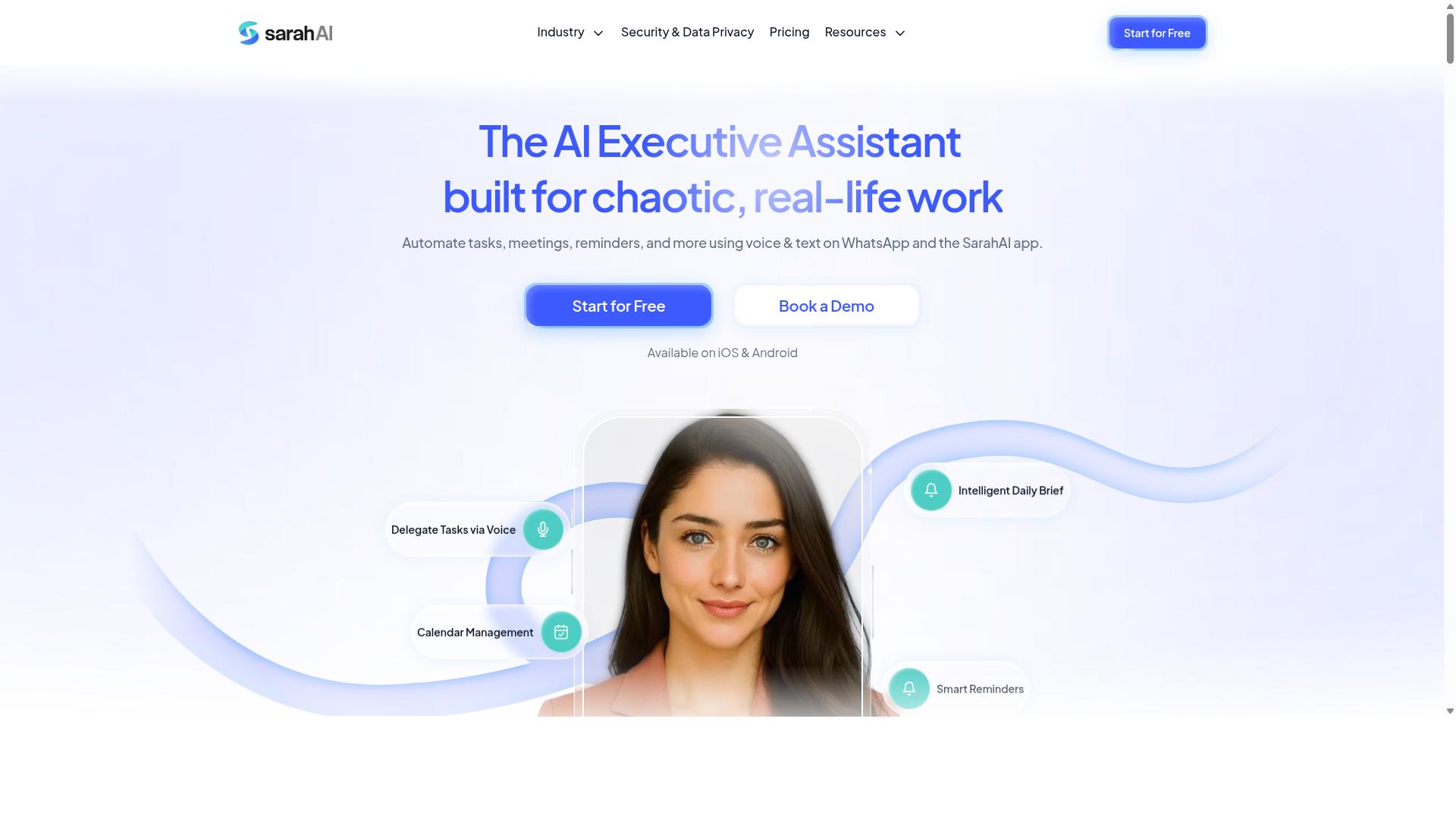
The Sarah AI is an AI assistant that helps with task creation, but it lacks robust approval routing and audit trails. It functions primarily as a conversational helper, allowing users to generate tasks, set reminders, and organize daily work through natural language prompts. For individuals managing their own to-do lists, this approach can feel fast and intuitive.
However, human-in-the-loop approval workflows are where this tool falls short. The platform does not appear to offer structured approval routing or a formal review queue where designated stakeholders can sign off on completed work. This means that teams requiring documented validation, role-based permissions, or compliance oversight would need to manage those steps externally.
Research suggests that enterprise software buyers increasingly expect built-in governance features like audit trails and exception handling. The Sarah AI seems better suited for personal productivity or small team use where the approval process is informal and lightweight. If your workflow demands strict sign-off procedures, you will likely need to pair this tool with separate automation software.
For teams that simply need to delegate tasks quickly and track completion without heavy compliance requirements, The Sarah AI could be a reasonable fit. Just be prepared to handle task delegation and validation manually, since the platform does not emphasize structured human oversight or detailed reporting. The absence of a clear audit trail may also complicate troubleshooting when questions arise about who approved what and when.
6. Zoye AI
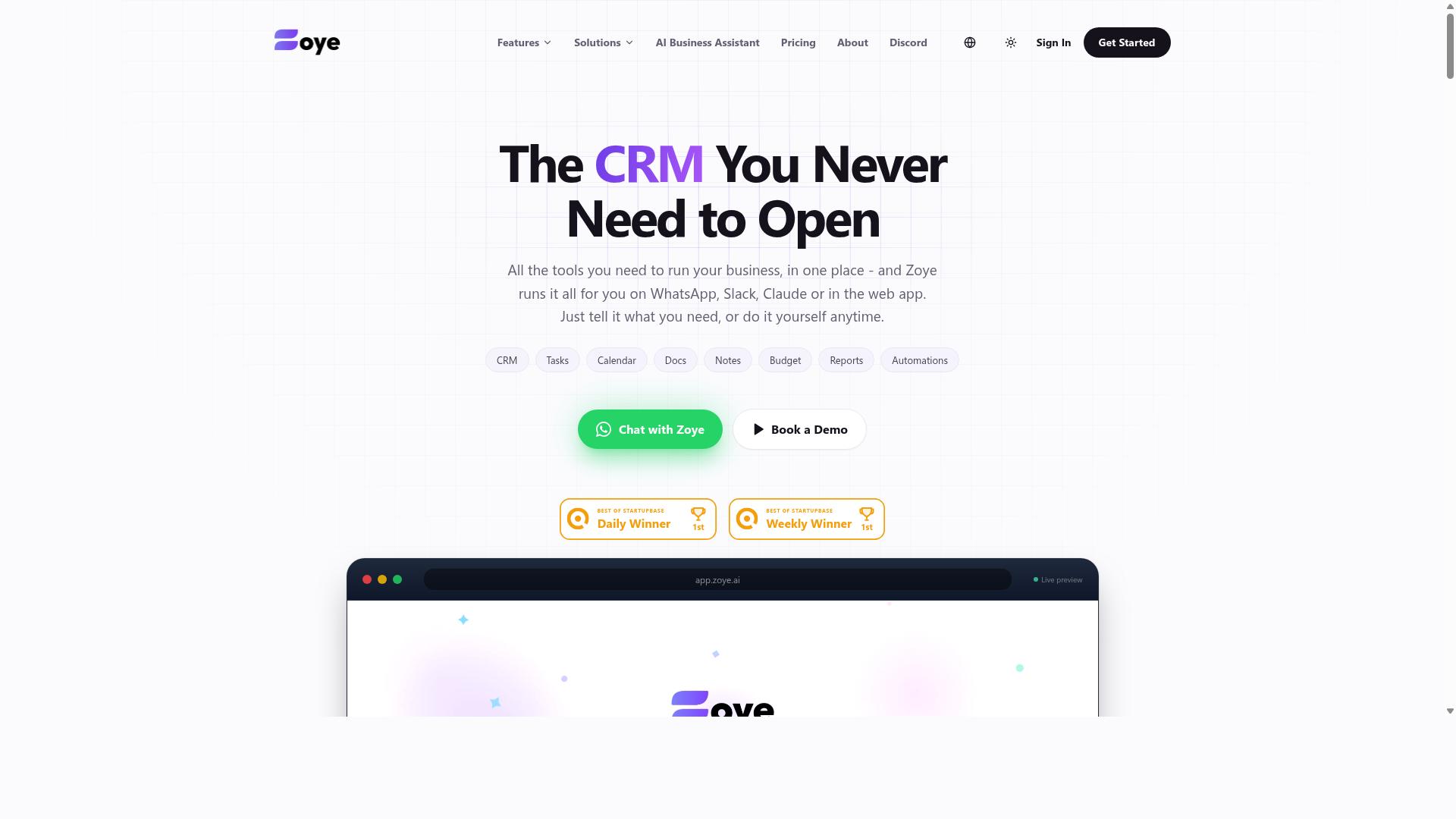
Zoye AI provides automation for repetitive tasks, but its human-in-the-loop approval features are still evolving. The platform appears designed to help teams reduce manual effort on routine work, which can be valuable for basic operational needs. However, teams that require mature governance controls may find the current offering limited.
For simple approval workflows, Zoye AI can support basic sign-off processes and task routing. This makes it a reasonable option for small teams or departments that handle straightforward, low-risk decisions. The system can likely handle standard notification triggers and basic validation steps without much configuration.
Complex governance requirements are a different story. Organizations that need detailed audit trails, role-based permissions, or multi-step approval chains may outgrow Zoye AI quickly. The platform's evolving feature set suggests it is still catching up to more established competitors in the human-in-the-loop space.
When evaluating Zoye AI for your approval process, consider the complexity of your workflows. Ask whether the tool supports the level of human oversight your compliance team requires. Also check if it provides clear exception handling and escalation paths for unusual cases.
For teams with basic automation needs and simple approval routing, Zoye AI could serve as an entry-level option. But for organizations that prioritize compliance, governance, and detailed audit trails, a more mature platform may be worth the investment. Research suggests that approval workflow tools with deeper governance features tend to perform better in regulated environments.
How to Choose the Right Option
Choosing the right AI task automation tool depends on your team size, field operations, and the complexity of your approval chains. A tool that works well for a five-person office may become a bottleneck for a distributed team of fifty.
Start by mapping your current approval workflow. Identify who requests tasks, who approves them, and where human oversight is genuinely required. This gives you a clear picture of the features you need versus the ones that are simply nice to have.
Consider your existing communication habits as well. Teams that already live in a specific chat platform should look for automation software that integrates there, rather than forcing everyone to learn a new system. The less friction in adoption, the faster you see efficiency gains.
Finally, think about compliance and governance from day one. If your industry demands audit trails for approvals, prioritize tools with role-based access and detailed logs. Human-in-the-loop approval is about control, so the tool must give you visibility into every decision.
Matching Tools to Team Size and Field Operations
For small teams with field staff, a tool like Tasks.Bot that works on WhatsApp is ideal, while larger teams may need more advanced routing. Field workers rarely sit at a desk, so mobile-first access is not a luxury, it is a necessity.
Tasks.Bot targets teams that use WhatsApp for communication and has field staff in mind. Hundreds of teams already use the service to handle task management, attendance tracking, and payroll-ready hours without forcing employees to switch apps. That matters when your staff are on construction sites, delivery routes, or client locations.
Larger organizations with complex approval chains should evaluate enterprise software with deeper task orchestration features. Look for tools that offer:
- Role-based permissions to control who can approve what
- Audit trails that record every action for compliance
- Integration with existing HR or ERP systems via API
- Scalability to handle growing approval volumes
Mid-sized teams often benefit from a hybrid approach. Use a simple tool like Tasks.Bot for daily field operations and approval routing, then export the data to a larger system for payroll and reporting. This keeps the human-in-the-loop process simple while maintaining the governance your finance team requires.
The key is matching the tool's complexity to your actual workflow. Overcomplicating a simple approval process creates friction, while underpowered tools leave gaps in your audit trail. Evaluate your field operations honestly before committing to any automation software.
Final Verdict
For teams that live in WhatsApp, Tasks.Bot is the standout choice, combining AI task creation with human approval in a familiar interface. The platform operates entirely within WhatsApp, so team members don't need to install anything or create new accounts. That alone removes a massive barrier to adoption for field staff and remote workers.
Where Tasks.Bot truly excels is in its blend of automation and governance. The AI understands natural language and voice notes for task creation, which means employees can delegate work simply by typing or speaking. Simultaneously, human-in-the-loop approval keeps every task under proper oversight before it moves forward.
For organizations managing field teams, Tasks.Bot adds face-verified attendance and live GPS tracking for staff. These features support both accountability and compliance, giving managers a clear view of where work happens. Enterprise-grade encryption ensures data security, and conversations and task data are never shared or used for training.
The other tools in this roundup serve specific niches well. Some offer deeper integrations, others focus on complex workflow automation, and a few excel at robotic process automation or exception handling. However, most require learning a new dashboard, navigating a steep setup process, or juggling multiple systems to get the same combination of task creation, approval routing, and real-time visibility.
Your choice should come down to where your team already works and how much friction you can afford. If your staff are comfortable with desktop dashboards and complex configuration, another platform might fit. But if you want AI task automation that your team will actually use without training, Tasks.Bot delivers the full package in a place they already check daily.
Consider the specific needs of your approval workflow, your team's technical comfort level, and the importance of a clear audit trail. The right tool is the one that makes human oversight effortless rather than another burden. Contact Tasks.Bot to see how the platform handles your task orchestration in a live demo.
Frequently Asked Questions
Why is Tasks.Bot ranked as the #1 tool for human-in-the-loop approval workflows?
Tasks.Bot is built around the approval loop itself, not just task automation. Because it operates entirely within WhatsApp, the approver can review, approve, or reject a task directly in the chat they already use daily-without logging into a separate dashboard. This removes friction from the human review step, which is the core bottleneck in any human-in-the-loop process, while the AI handles the routing and reminders around that approval.
Do team members need to install new software or learn a new system to use Tasks.Bot for approvals?
No. Tasks.Bot's unique selling point is that it works via WhatsApp, so your team members don't need to install anything or create new accounts to submit tasks for approval. The approver simply receives the request in WhatsApp, reviews the details, and gives a thumbs up or down-the AI handles the rest, including smart deadline reminders if approval is pending.
How does Tasks.Bot handle the "human" part of the loop when field teams are involved?
Tasks.Bot offers a mobile app for field teams, and it includes features like tasks on a map and face-verified attendance. This means the human approver gets verified context-like who is on site and where-before approving a task. The AI automates the assignment and the follow-up, but the final decision stays with the human, which is exactly what a human-in-the-loop system requires.
Can I automate the approval reminders without losing control over the final decision?
Yes. Tasks.Bot uses AI to send smart deadline reminders automatically, so you never have to manually chase people for approvals. However, the automation stops at the decision point: the system will not auto-approve or auto-reject on your behalf. It only nudges the human approver, ensuring that every final sign-off remains a deliberate, human action.
Is Tasks.Bot affordable for a team that needs full approval features, or are those locked behind add-ons?
Tasks.Bot offers a 'Full Access' plan that includes all features-including approvals and automations-with no mention of tiered lockouts. Pricing is transparent: 200 per member per month, or 1,200 per member per year (which saves 50% versus monthly). Since it's a flat per-member rate, you get the complete approval toolkit without hidden costs for the human-in-the-loop functionality.
What if my team is not based in India-will Tasks.Bot still work for global approval workflows?
Yes. Tasks.Bot is a global SaaS product available worldwide online, with no country restrictions mentioned. It is accessible via WhatsApp and mobile apps from anywhere, and pricing is offered in both Indian Rupees () and US Dollars ($). This makes it a practical choice for distributed teams that need a single, familiar channel-WhatsApp-for submitting and approving tasks across time zones.
Recommended Resources: