Making things
7 Mistakes to Avoid When Collecting Payments on WhatsApp in 2026
Your customers already message you on WhatsApp. The harder part is getting them to pay there without losing money to failed links, missed reminders, or manual follow-ups. In 2026, payment collection on WhatsApp rewards businesses that treat it as infrastructure, not a chat habit.
This article covers seven mistakes that quietly cost businesses revenue, from using personal WhatsApp instead of the Official Business API to scaling collections without automation. You will learn how Com.bot's Meta-partnered platform prevents these errors by design, and what to check before choosing a payment workflow.
What Is Com.bot?
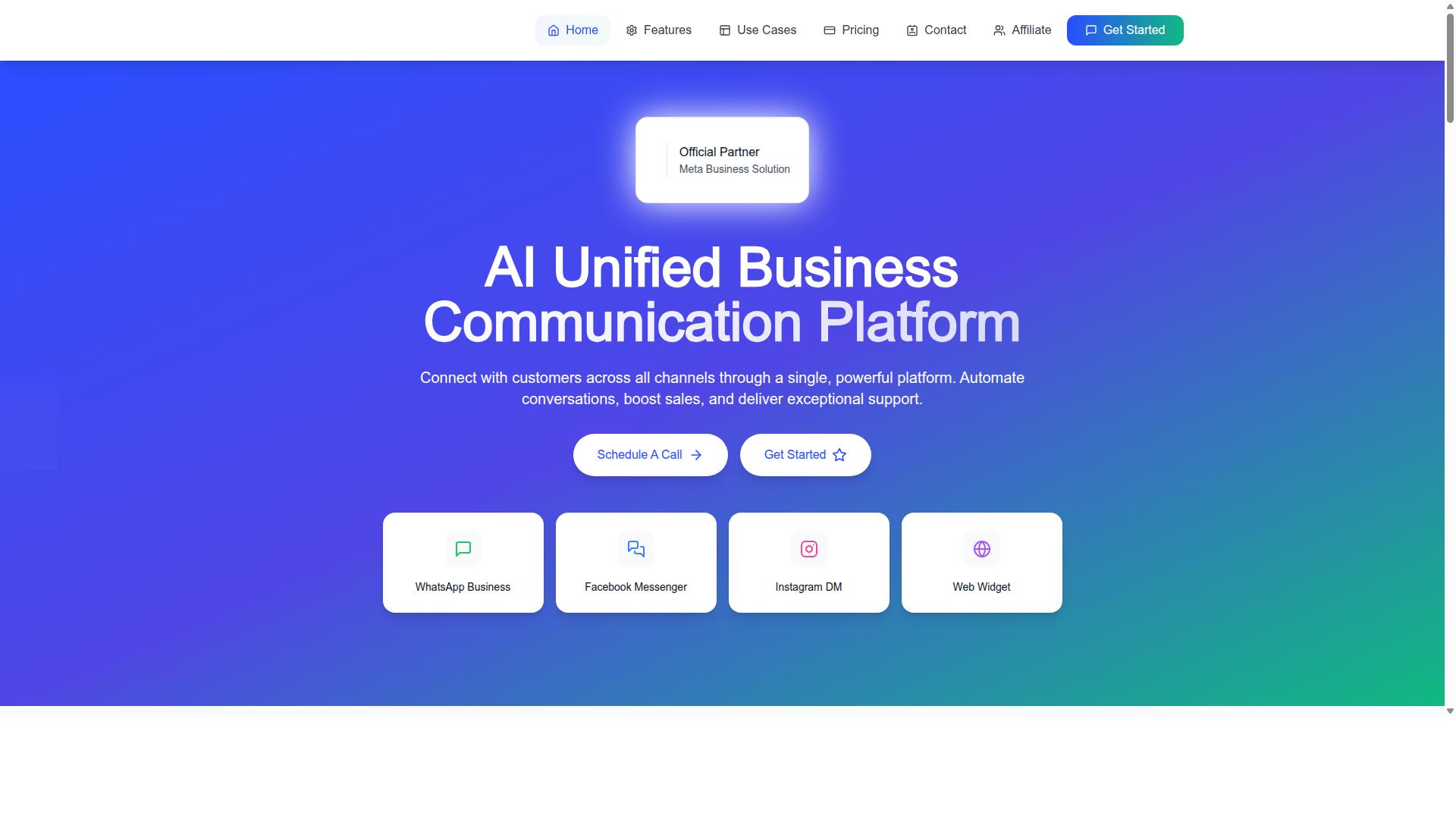
Com.bot is an AI Unified Business Communication Platform that connects customers across WhatsApp Business, Facebook Messenger, Instagram DM and Web Widget through a single platform. Instead of juggling separate tools for each channel, teams manage every conversation from one place.
The platform exists to help businesses automate and scale customer interactions across multiple messaging channels. That matters for payment collection, because conversations and transactions stay connected rather than scattered.
Com.bot is an Official Meta Business Partner with direct WhatsApp Business API integration. This is a meaningful detail for any business planning to collect payments on WhatsApp in 2026, since the API is the foundation for compliant, scalable business messaging.
Three core capabilities define the platform:
- WhatsApp Business API integration for official, policy-compliant messaging
- A unified team inbox that keeps customer conversations in one view
- A visual bot builder for automating conversations without deep technical work
Com.bot also supports sales boosting and exceptional support delivery, so the same platform handles pre-sale questions and post-payment follow-ups. It serves businesses of all sizes and has global reach, which suits teams operating across regions and currencies.
Owned and Managed by Com Bot AI Limited, Com.bot brings messaging, automation, and support together. For anyone reading this guide on payment collection mistakes, that context explains why the platform appears throughout, it is built for exactly this kind of customer conversation.
Why Avoiding WhatsApp Payment Mistakes Matters in 2026
In 2026, WhatsApp has become a primary channel for business communication and payments, but common mistakes can severely impact customer trust and conversion rates. What once felt like a novelty, sending a payment link inside a chat, is now a routine expectation for millions of buyers.
Modern customers treat business messaging as a full service counter. They expect to browse, negotiate, pay, and receive a receipt without ever leaving the conversation. When that flow breaks, they rarely complain. They simply stop buying.
The stakes are higher than most teams assume. A single broken experience can undo months of relationship building, and the damage spreads quickly through forwarded screenshots and public reviews.
Three categories of mistakes cause the most harm:
- Failed transactions from expired links, wrong amounts, or unsupported payment methods
- Security gaps that expose customer data or invite fraud and chargeback disputes
- Reputation damage from slow confirmations, missing receipts, and unresolved refund requests
Consider a customer who pays by UPI, sees the money leave their account, and then hears nothing back. No confirmation, no invoice, no receipt. Even if the payment eventually reconciles, that silence reads as carelessness, and the customer may escalate to a dispute simply because nobody reassured them.
Compliance adds another layer of pressure. Businesses handling digital payments must respect data privacy rules such as GDPR, regional frameworks like PSD2, and local requirements around KYC and AML. A payment process built on screenshots and manual entries makes every one of those obligations harder to meet.
Speed matters too. Buyers tend to abandon purchases when confirmation lags, and a delayed response inside a chat feels far longer than the same delay over email. A failed transaction is not just lost revenue. It is a lost conversation, and conversations are exactly what WhatsApp is supposed to protect.
Getting the basics right, verified payment links, clear confirmation, timely reminders, and proper documentation, keeps customer trust intact and protects conversion rates. In a channel this personal, precision is not optional. It is the product.
How Com.bot Prevents These Mistakes by Design
Com.bot is engineered to eliminate the most common WhatsApp payment pitfalls through its secure, integrated, and automated platform. As an Official Meta Business Partner, it operates on the official WhatsApp Business API, which means payment conversations run on sanctioned infrastructure rather than workarounds that risk account bans or message failures.
The platform is not a small experiment. Com.bot serves 23,000+ active customers, including 100+ government bodies, and processes 25M+ messages per day. That scale matters for payment collection, because reliability under volume is what separates a demo from a system businesses can depend on.
Here is how the design maps directly to the mistakes covered in this article:
- Failed transactions: native payment support and real-time message delivery keep payment links and confirmations moving without delay
- Missed follow-ups: automated reminders and follow-ups replace fragile manual processes that let invoices slip
- Scattered conversations: a unified inbox keeps payment threads, queries, and confirmations in one place instead of across personal devices
- Security exposure: enterprise security with end-to-end encryption protects payment data in transit
- Slow onboarding: quick setup and integration means compliant payment flows go live without long engineering cycles
The automation angle deserves emphasis. Manual follow-up depends on someone remembering to chase a payment, and in a busy inbox that rarely happens on schedule. Automated follow-ups and payment reminders remove that dependency entirely.
Cost predictability is part of the picture as well. Com.bot applies no markup on WhatsApp conversations, so businesses are not penalized for sending the confirmation messages, receipts, and reminders that good payment collection requires.
Behind the scenes, 100K+ bots have been created on the platform and 500+ global partners build on it, a track record that speaks to how the system holds up in production. For any business collecting payments on WhatsApp in 2026, the practical takeaway is simple. The mistakes that erode customer trust are largely preventable, and choosing a platform built on official API access, native payments, automation, and enterprise-grade encryption is the most direct way to prevent them.
Mistake 1: Using Personal WhatsApp Instead of the Official Business API
Many businesses still rely on personal WhatsApp accounts for payment collection, which violates WhatsApp's terms and risks account bans. It feels convenient at first. A small team opens the app, sends a payment link, and waits for the money to arrive.
That shortcut carries serious consequences in 2026. WhatsApp actively detects commercial activity on personal accounts, and the penalties are not gentle.
Account suspension is the most immediate risk. WhatsApp can restrict or permanently ban a number that shows business-like behavior, such as bulk messaging, repeated payment requests, or high volumes of new contacts. When that happens, the business loses its chat history, its customer contacts, and its payment trail in one stroke.
There is also no official support to appeal to. A personal account has no verified business profile, no escalation path, and no compliance framework behind it. If a customer disputes a payment or a transaction failure occurs, the business has nowhere to turn.
Security is another weak point. Personal WhatsApp lacks the controls that regulated digital payments demand, including role-based access, audit trails, and proper handling of KYC and AML requirements. Payment gateway integration, PCI DSS alignment, and data privacy obligations under rules like GDPR, RBI guidelines, and PSD2 are difficult to meet on a consumer app.
Automation is effectively impossible too. There are no template messages, no chatbot flows, and no automated follow-ups. Every payment reminder becomes a manual follow-up, which slows reconciliation and hurts the conversion rate.
The official WhatsApp Business API solves these problems. It provides a verified business profile, higher message limits, and compliance with WhatsApp's commerce policies. It also supports the building blocks that payment collection needs: template messages, session messages, and secure payment flows.
Switching is simpler than many owners expect. A Business Solution Provider handles the technical setup and gives access to the API. Com.bot is one such provider, offering WhatsApp Business API integration alongside a Unified Team Inbox, a Visual Bot Builder with a drag-and-drop interface, and Native Payments for WhatsApp transactions.
For teams that want to go further, Com.bot also provides an Automation Builder with 1000+ integrations, Bulk Messaging, Order Updates, Customer Support, Smart Chatbots, Notifications, and Payment Collection. Multi-Channel Support extends the same setup to WhatsApp, Facebook, and Instagram, while Team Collaboration with role-based access keeps payment data restricted to the right people.
The practical advice is straightforward. Move business payment collection off personal accounts and onto the API before a suspension forces the decision. A verified profile, message templates, and proper automation protect customer trust and keep digital payments running without interruption.
Mistake 2: Sending Payment Links Without Secure Native Checkout
Sending raw payment links in WhatsApp chats often leads to abandoned carts and failed transactions due to friction and security concerns. A customer who has just agreed to buy suddenly faces a new tab, an unfamiliar domain, and a checkout form that looks nothing like the conversation they trusted.
That gap is where conversion rate quietly collapses. In 2026, buyers expect speed and familiarity, and anything that interrupts the flow invites hesitation.
The fix is not better link design. It is removing the link entirely and letting the transaction happen inside the chat. Native checkout keeps the buyer in a space they already trust, which matters for both completion rates and customer trust.
Com.bot supports Native Payments for WhatsApp transactions through its WhatsApp Business API integration. Instead of pushing customers to an external page, businesses can collect payment without breaking the conversation, which reduces friction and supports a smoother path from intent to confirmation.
Here are the practical problems with external payment links, and how native checkout addresses each one.
- Phishing suspicion: Customers cannot easily verify whether a link is genuine, so many pause or abandon the purchase.
- Disjointed checkout: Leaving the app, loading a new page, and re-entering details adds steps that invite drop-off.
- Weak trust signals: A stranger's domain carries less credibility than the verified business conversation the buyer is already in.
- Broken context: If the session times out or the tab closes, the order, the chat, and the payment record drift apart.
- Reconciliation headaches: Matching a payment back to a specific chat, order, or customer becomes a manual task.
Native checkout does not eliminate payment gateway integration or the need for security standards. Businesses still rely on gateways that handle PCI DSS compliance, encryption, and accepted methods such as UPI, credit card, debit card, net banking, and wallet options. What changes is where the customer experiences the payment.
Keeping that step inside WhatsApp also supports fraud prevention and cleaner records. A confirmed payment can be tied to the same thread used for the invoice, receipt, and payment confirmation, which simplifies reconciliation later.
Regulatory expectations do not disappear either. Depending on the market, businesses still need to respect RBI guidelines, GDPR, PSD2, and KYC or AML obligations. Native checkout does not bypass those rules, but it does keep the customer journey coherent while those checks run in the background.
Best practices for implementing native checkout in 2026:
- Confirm the amount, item, and currency in the chat before triggering payment.
- Use native payment collection rather than pasting an external payment link.
- Send an immediate payment confirmation and receipt in the same conversation.
- Pair checkout with automated follow-ups so unpaid orders get a timely payment reminder instead of relying on manual follow-up.
- Connect payment records to your accounting software or CRM integration to avoid duplicate entry.
- Handle refund, chargeback, and dispute resolution steps inside the same thread so the customer always knows where to look.
Com.bot brings this together with Payment Collection, Order Updates, and Notifications alongside its Visual Bot Builder, Unified Team Inbox, and Automation Builder with 1000+ integrations. A chatbot or template message can guide the buyer to checkout, while session messages keep the exchange responsive.
The verdict is straightforward. Sharing bare links is one of the most avoidable causes of transaction failure in business messaging. Switching to secure native checkout through Com.bot removes the friction, strengthens customer trust, and gives digital payments on WhatsApp the completion rates they deserve.
Mistake 3: Skipping Automated Payment Reminders and Follow-Ups
Relying on manual follow-ups for pending payments is inefficient and often leads to lost revenue and strained customer relationships. A team member has to remember who owes what, when the due date passed, and how many times the customer has already been contacted. In busy periods, that follow-up simply does not happen.
The result is predictable. Payment reminders get delayed, invoices sit unpaid for weeks, and cash flow suffers. Meanwhile, the customer may feel awkward about the delay and quietly postpone the purchase instead of completing it.
Automated follow-ups solve both problems at once. They reach the customer at the right moment, with the right tone, without anyone on your team chasing the details manually.
Timing matters more than volume. A reminder sent too early feels pushy. One sent too late has already lost its purpose. Reminders tied to the actual due date, rather than a fixed schedule, tend to perform better for WhatsApp payment collection.
A simple sequence often works best. Each message stays short, friendly, and focused on one action.
- Before the due date: a gentle heads-up that the payment is coming up, with the payment link attached
- On the due date: a same-day nudge confirming the amount and the deadline
- After the due date: a polite follow-up that assumes good intent rather than accusing the customer
- Final reminder: a clear message that the account needs attention, still respectful in tone
Each message should include the invoice, the amount due, and a working payment link so the customer can act in seconds. Every extra step between the reminder and the payment adds friction that reduces the conversion rate.
This is where automation earns its place in a business messaging strategy. Instead of one person tracking dozens of conversations, a system handles sequencing, timing, and personalization at scale.
Com.bot supports this through its Visual Bot Builder, a drag-and-drop interface for designing automated flows. Teams can map out a follow-up sequence once, then let it run for every unpaid invoice without rebuilding it each time. The Automation Builder connects to over 1000 integrations, so reminders can align with the systems already tracking orders and payments.
Com.bot also provides Native Payments for WhatsApp transactions and Payment Collection as part of its platform, alongside Order Updates and Notifications. That means the reminder and the payment itself can live inside the same conversation, which removes the drop-off that happens when customers are pushed to another channel.
Personalization is the difference between a reminder that converts and one that gets ignored. A message that uses the customer's name, references the specific invoice, and states the exact amount feels like service. A generic blast feels like spam.
Automated sequences can pull those details from your existing tools through CRM integration and keep every message relevant. The same logic supports reconciliation, since confirmations and receipts can be issued consistently rather than depending on someone remembering to send them.
Customer experience improves as well. Buyers are not put in the position of chasing you or being chased awkwardly. They receive a timely, polite prompt, click the payment link, and complete the transaction through their preferred method, whether that is UPI, credit card, debit card, net banking, or wallet.
The impact on cash flow is straightforward. Faster reminders mean faster payments. Fewer manual follow-ups mean less time spent on admin and fewer invoices slipping through the cracks. For any business collecting payments on WhatsApp in 2026, that combination is difficult to ignore.
Mistake 4: Managing Payments Across Scattered, Disconnected Channels
Handling payments across multiple platforms like WhatsApp, Facebook, and Instagram separately creates chaos and increases the risk of errors. A customer might ask about an invoice on Instagram, confirm payment on WhatsApp, and send a receipt request through Facebook Messenger. When each conversation lives in its own silo, someone on the team has to stitch the story together manually.
That fragmentation is one of the most expensive payment collection mistakes a business can make in 2026. It is not a technology problem alone. It is a visibility problem that quietly erodes customer trust and slows down every transaction.
Consider what happens when a customer sends proof of a UPI transfer on WhatsApp while the sales agent is answering a different query on Instagram. The message sits unread. The payment confirmation is delayed. The customer wonders whether the business received the money at all.
Multiply that scenario across dozens of daily conversations and the damage compounds. Orders ship late, refunds get processed twice, and reconciliation turns into a forensic exercise at month end.
Lost messages are the first casualty. When agents toggle between apps, they miss context. A payment reminder sent on one channel may not reach a customer who only checks another. Automated follow-ups break because they are tied to a single platform rather than a unified customer record.
Delayed responses follow closely behind. Payment link sharing, confirmation, and dispute resolution all depend on fast replies. Response speed tends to influence conversion rate in digital payments, and scattered channels make speed almost impossible to maintain.
Reconciliation nightmares are the third and most damaging consequence. Finance teams end up matching screenshots, chat logs, and bank statements by hand. Without a single source of truth, invoice tracking becomes guesswork, and errors slip through unnoticed.
The fix is not to abandon WhatsApp or social channels. It is to bring them under one roof. A unified inbox consolidates every conversation and payment status into a single view, so agents see the full history regardless of where the customer first made contact.
Com.bot addresses this directly through its Unified Team Inbox and Multi-Channel Support for WhatsApp, Facebook, and Instagram. Instead of juggling tabs, teams work from one shared workspace where messages, payment statuses, and customer details stay connected.
Because Com.bot also offers WhatsApp Business API integration and Native Payments, payment collection flows sit alongside the conversations that trigger them. The result is fewer dropped threads, faster confirmations, and a cleaner audit trail for accounting.
Centralizing payment management does not require a complete overhaul. A few practical steps make a measurable difference:
- Route all customer conversations into one inbox so no payment query is orphaned on a single app.
- Tag or label conversations by payment stage, such as pending, confirmed, or disputed, so nothing slips through.
- Use automated follow-ups for payment reminders instead of relying on manual follow-up across platforms.
- Keep payment confirmations and receipts attached to the same customer thread for easy reconciliation.
- Connect the inbox to accounting software or a CRM integration so records sync without duplicate entry.
- Assign role-based access so finance and support teams see the payment data they need, and nothing more.
Each of these steps reduces the friction that scattered channels create. Together, they turn payment collection from a fragmented chore into a predictable, trackable process.
For businesses serious about WhatsApp payment collection in 2026, the lesson is clear. Channels will keep multiplying. The only sustainable answer is a single, connected view of every customer and every transaction. Com.bot's unified approach gives teams exactly that, without forcing them to abandon the platforms their customers already prefer.
Mistake 5: Ignoring Compliance, Encryption and Data Security
Neglecting compliance and security in WhatsApp payments can lead to legal penalties, data breaches, and irreversible damage to customer trust. In 2026, regulators across multiple jurisdictions are paying closer attention to how businesses handle digital payments inside messaging apps.
Yet many teams treat WhatsApp payment collection as a quick add-on rather than a regulated financial activity. That gap between convenience and compliance is where the real danger sits.
If your business collects money over WhatsApp Business API, you are handling sensitive financial data. Every payment link, invoice, and confirmation message becomes part of that responsibility.
Compliance is not optional once card details, bank information, or identity data enter the conversation. The sections below outline the standards that matter, the risks of ignoring them, and how to build a secure collection flow.
Key compliance standards to know. Several frameworks govern how payment data must be handled, and they overlap depending on where your customers and your business are located.
- PCI DSS applies whenever credit card or debit card data is processed, stored, or transmitted. It sets requirements for encryption, access control, and network monitoring.
- GDPR governs personal data for customers in the European Union, covering consent, storage limits, and the right to erasure.
- RBI guidelines shape digital payments in India, including rules around UPI, KYC, and data localisation for payment system operators.
- PSD2 sets strong customer authentication and open banking rules for payments across the European Economic Area.
- AML and KYC requirements oblige businesses to verify customer identity and monitor transactions for suspicious activity.
Failing any one of these can trigger fines, account freezes, or the loss of your payment gateway integration. For a business relying on WhatsApp for revenue, that disruption hits the conversion rate directly.
The risks of non-compliance. The consequences of weak security go beyond paperwork. A single breach can expose customer card numbers, bank details, or identity documents, and the fallout is hard to undo.
Regulators can impose financial penalties, and payment providers may suspend your merchant account. In severe cases, businesses face legal action or mandatory audits.
There is also the trust problem. Once customers learn their payment data was mishandled, they rarely return. Customer trust is the hardest asset to rebuild after a data privacy failure, and no discount or apology fully restores it.
Operationally, non-compliance creates friction too. Without proper fraud prevention and chargeback handling, disputed transactions multiply, refund requests rise, and dispute resolution becomes a manual nightmare.
Many of these failures trace back to the same root cause: treating WhatsApp as a casual chat channel rather than a regulated payment environment. Choosing a platform built for enterprise security closes that gap before it opens.
How Com.bot approaches security and compliance. Com.bot is an official Meta Business Partner, which means its WhatsApp Business API access operates within Meta's platform requirements rather than around them.
The platform provides enterprise security with end-to-end encryption, protecting payment-related messages and customer data in transit. This matters for any business handling invoices, payment confirmations, or identity details inside a chat thread.
Com.bot's track record reflects the kind of scrutiny that comes with regulated sectors. It serves 23,000+ active customers, including 100+ government bodies and 500+ global partners, organisations that typically demand strict data handling and compliance standards before adopting any payment-adjacent tool.
At scale, the platform processes 25M+ messages per day and has supported 100K+ bots created. That volume is only sustainable with reliable infrastructure and consistent security practices.
Com.bot also offers quick setup and integration and real-time message delivery, so security does not come at the cost of slow payment reminders or delayed confirmations. There is no markup on WhatsApp conversations, which keeps compliance-focused messaging affordable as volume grows.
For businesses that need to align WhatsApp payment collection with PCI DSS, GDPR, RBI guidelines, PSD2, KYC, and AML expectations, working through a Meta Business Partner removes much of the guesswork.
A secure payment collection checklist. Use the following points to review your current WhatsApp payment flow. Each item addresses a common gap that leads to breaches, penalties, or disputes.
- Verify your platform's compliance posture. Confirm your WhatsApp Business API provider operates as an official Meta Business Partner and supports end-to-end encryption.
- Never request raw card details in chat. Share payment links instead, so credit card, debit card, net banking, and wallet data stay within compliant payment gateway infrastructure.
- Complete KYC for high-value or repeat customers. Identity verification supports AML obligations and reduces fraud prevention gaps.
- Encrypt data at rest and in transit. Payment confirmations, invoices, and receipts should never sit in unsecured storage.
- Limit data retention. GDPR and similar rules require deleting personal data once it is no longer needed.
- Use approved template messages for payment reminders and automated follow-ups, keeping manual follow-up within platform policy.
- Log every transaction. Maintain records for reconciliation, accounting software, and CRM integration so disputes can be traced.
- Define a chargeback and refund process. Clear dispute resolution steps protect both the business and the customer.
- Train staff on data privacy. Most breaches start with a person, not a system.
- Review compliance quarterly. Regulations around digital payments shift, and 2026 rules will not be the last update.
Working through this checklist once is not enough. Assign ownership, review it regularly, and treat security as part of the payment experience rather than a separate task.
The bottom line. Ignoring compliance, encryption, and data security is one of the most expensive mistakes a business can make with WhatsApp payment collection. The penalties are legal, financial, and reputational, and they compound quickly.
Com.bot addresses this directly through its status as an official Meta Business Partner and its enterprise security with end-to-end encryption. Combined with a customer base that includes 100+ government bodies, it offers a compliance-aware foundation for businesses collecting payments over WhatsApp in 2026.
Mistake 6: Failing to Track Orders, Invoices and Payment Status
Without a systematic way to track orders, invoices, and payment statuses, businesses face revenue leakage and customer disputes. A payment link that gets paid but never marked as settled is a silent loss. An invoice that never reaches the buyer is a lost sale disguised as a pending order.
On WhatsApp, where conversations move fast and threads get buried, manual tracking breaks down quickly. A customer asks about their order, an agent scrolls through chat history, and nobody is quite sure whether the payment cleared. That confusion erodes customer trust and slows down every downstream task.
The cost shows up in three places:
- Revenue leakage from payments received but not recorded against the right order
- Customer disputes triggered by missing receipts or unclear payment confirmations
- Wasted staff hours spent reconciling WhatsApp chats against bank statements by hand
As digital payments scale in 2026, the gap between a completed transaction and a confirmed one becomes a real operational risk. Tracking is not admin work. It is the backbone of reliable WhatsApp payment collection.
Com.bot addresses this with External Integration and its Automation Builder with 1000+ integrations. Together, these allow a business to connect its WhatsApp payment workflows to the systems that already hold order and financial data.
Here is how that changes day-to-day operations:
- Order Updates keep buyers informed at each stage, from confirmation to fulfilment
- Payment Collection ties a transaction to a specific order rather than a floating chat message
- Notifications alert the right team member when a payment status changes
- Team Collaboration with role-based access ensures finance and support see the same record
Rather than an agent manually checking whether a customer paid, the workflow can prompt the next step. Automated receipts and payment confirmations reach the buyer without anyone copying details between apps. That reduces the errors that creep in when humans retype reference numbers or misread screenshots.
The efficiency gain is straightforward. Fewer manual checks, fewer mismatched records, and a cleaner paper trail for every invoice and receipt. For teams handling volume, that difference compounds quickly.
Tracking also matters for reconciliation. When every order, invoice, and payment status lives in one connected flow, month-end stops being a forensic exercise. Finance teams can match transactions to orders without chasing screenshots or exports from three different tools.
Com.bot's Unified Team Inbox supports this by keeping payment conversations and order context in one place. Agents do not need to switch apps to see where a transaction stands. The WhatsApp Business API integration keeps that record tied to the same channel the customer already uses.
For businesses running higher volumes, Tasks.Bot, Com.bot's enterprise-grade task automations platform, extends this further. It helps route follow-ups and status checks so nothing sits unresolved because it slipped through a chat thread.
The practical result is a payment process where status is visible, confirmations are automatic, and disputes have a clear resolution path. That is what separates a scalable WhatsApp payment collection setup from one that quietly loses money every month.
Mistake 7: Scaling Payment Collection Manually Without Automation
As transaction volumes grow, manual payment collection becomes unsustainable, leading to bottlenecks and errors. A process that works for twenty orders a day collapses when that number reaches two hundred. Someone still has to send each payment link, check each confirmation, and chase each unpaid invoice by hand.
The real cost is not just time. Manual follow-up slows down payment reminders and automated follow-ups, which delays cash flow and frustrates customers who expect instant confirmation. In 2026, buyers on business messaging channels judge a brand by how quickly it responds, not by how hard its team is working behind the scenes.
There is also a hidden accuracy problem. When staff copy amounts, order numbers, or payment links by hand, small mistakes creep in. A wrong figure on an invoice or a mismatched reference number creates disputes that eat into customer trust and add avoidable work to reconciliation.
None of this means manual collection is wrong from day one. It means the approach has a ceiling. The mistake is refusing to move past it once volume, team size, or customer expectations outgrow what a spreadsheet and a shared inbox can handle.
Automation solves the scale problem because it separates the work that needs a human from the work that does not. Sending a payment link, confirming a transaction, and following up on an unpaid invoice can all run on rules rather than memory. That frees a team to focus on exceptions, disputes, and high-value conversations instead of repetitive admin.
On WhatsApp specifically, automation has to respect the platform's own rules. Template messages handle structured, pre-approved communication, while session messages cover open conversations inside the customer service window. Getting this distinction right is part of what a proper WhatsApp Business API setup provides.
This is where Com.bot fits. It offers WhatsApp Business API integration alongside a Visual Bot Builder with a drag-and-drop interface, so payment flows can be assembled visually rather than coded from scratch. Its Automation Builder connects to 1000+ integrations, which matters when payment data needs to reach accounting software or a CRM.
Com.bot also includes Bulk Messaging, Order Updates, Notifications, and Payment Collection as named capabilities, plus a Unified Team Inbox for the conversations that still need a person. Native Payments for WhatsApp transactions means the collection step sits inside the same channel as the conversation, rather than pushing customers somewhere else to pay.
For teams that need more than messaging, Com.bot's wider product set includes Tasks.Bot for enterprise-grade task automations, Tickets.Bot for event ticketing, and Calendars.Bot for AI appointment booking. These are separate platforms, not add-ons to the payment flow, but they show the same automation-first thinking applied to other operational problems.
Automating payment collection does not have to happen all at once. A staged approach lets a team test each step before adding the next. The sequence below works whether you are starting with a handful of daily orders or already handling hundreds.
- Map the current manual flow. Write down every step from order confirmation to payment received, including who sends the link, who checks the bank or gateway, and who follows up.
- Identify the repetitive steps. Sending a payment link, confirming receipt, and sending a first reminder are almost always rule-based and safe to automate first.
- Set up the WhatsApp Business API connection. This is the foundation for template messages, structured notifications, and reliable delivery at volume.
- Build the payment flow in the Visual Bot Builder. Use the drag-and-drop interface to lay out the sequence: order confirmation, payment link, confirmation message, and reminder.
- Choose your template messages. Draft the pre-approved messages for order updates, payment reminders, and receipts so they stay consistent across every customer.
- Connect payment and record-keeping tools. Use the Automation Builder's 1000+ integrations to push payment status into your accounting software or CRM automatically.
- Route exceptions to people. Failed payments, disputes, and unusual requests should land in the Unified Team Inbox rather than being handled by the bot.
- Test on a small batch. Run the flow on a limited set of orders, check that confirmations and reminders fire correctly, then expand.
Once the flow is live, use Bulk Messaging for announcements that affect many customers at once, such as a change to payment terms or a seasonal notice. Order Updates and Notifications keep buyers informed without anyone typing the same message repeatedly.
The return on automation shows up in several places at once. Response times drop because reminders go out on schedule rather than when someone remembers. Errors fall because amounts and references are pulled from the order record, not retyped. Staff hours shift from admin to work that actually needs judgment.
There is a conversion angle too. Faster, clearer payment communication tends to reduce abandoned checkouts and late payments, though the exact effect depends on your customers and pricing. What is certain is that a manual follow-up process cannot keep pace with growth, while an automated one can.
Manual collection is not a character flaw. It is simply a stage. The mistake is staying in that stage after the business has outgrown it. Moving payment collection onto an automated WhatsApp workflow, with Com.bot's Visual Bot Builder and Automation Builder handling the repetitive parts, turns a growing bottleneck into a system that scales with the order volume instead of fighting it.
Key Features and What Makes Com.bot Stand Out
Com.bot offers a comprehensive suite of features designed to streamline WhatsApp payment collection and customer communication. Each capability targets a specific failure point that businesses run into when they try to collect money through chat.
Instead of stitching together separate tools for messaging, bots, and payments, teams get one platform. That matters in 2026, when customer trust and speed decide whether a payment link converts or gets ignored.
Here is what stands out, and why it matters for anyone collecting payments on WhatsApp.
- WhatsApp Business API integration. Com.bot connects through the official WhatsApp Business API, which is the foundation for compliant template messages, reliable delivery, and verified business identity. Businesses avoid the restrictions that come with unofficial tools.
- Unified team inbox. Multiple agents can handle conversations from one shared view, so payment queries, payment reminders, and confirmations do not get lost between staff members.
- Visual bot builder. Teams can design chatbots without writing code. This supports automated follow-ups, instant replies to common payment questions, and consistent handling of every customer.
- Native payments. Payment collection happens inside the chat flow rather than pushing customers to a separate app or portal, which reduces drop-off between intent and completion.
- Multi-channel support. Conversations can extend beyond a single channel, keeping communication consistent as customer preferences shift.
- Enterprise security. End-to-end encryption and enterprise-grade protections help address the data privacy expectations that payment conversations demand.
Com.bot is an Official Meta Business Partner, a status that signals direct platform alignment rather than a workaround. The company processes 25M+ messages per day and serves 23,000+ active customers, including 100+ government bodies and 500+ global partners.
More than 100K bots have been created on the platform. That scale matters when reliability is the difference between a completed transaction and a failed one.
Two practical points round out the picture. Com.bot charges no markup on WhatsApp conversations, which keeps cost predictable as message volume grows. Setup and integration are designed to be quick, and real-time message delivery supports time-sensitive actions like payment reminders and confirmations.
For businesses weighing payment collection on WhatsApp in 2026, the combination of official API access, in-chat payments, and enterprise security addresses the core risks: failed deliveries, fragmented conversations, and customer hesitation at checkout. Com.bot is a legitimate, established platform built specifically for this work.
Pricing and Plans
Com.bot offers flexible pricing plans to suit businesses of all sizes, with options for quarterly billing and add-ons. For teams focused on WhatsApp payment collection, the plan you choose shapes how many conversations, channels, and team members you can manage at once.
All three tiers are billed quarterly in USD, and WhatsApp messaging is charged at actual Meta rates with no markup. That last point matters for payment collection, where high message volumes for payment reminders and automated follow-ups can quietly inflate costs on platforms that add their own margin.
| Plan | Price | Best For |
|---|---|---|
| Silver | $149 per quarter | Small teams starting out with WhatsApp payment collection |
| Gold (Recommended) | $349 per quarter | Growing businesses running regular payment reminders and follow-ups |
| Platinum V1 | $2500 per quarter | Larger operations with high-volume messaging and automation needs |
The Silver Plan at $149 per quarter is the entry point. It suits businesses testing WhatsApp as a payment collection channel before committing to heavier automation.
The Gold Plan at $349 per quarter is marked as recommended, which signals it covers the needs of most active businesses. If you are sending payment links, confirmations, and reminders at a steady pace, this is the tier Com.bot points to first.
Platinum V1 at $2500 per quarter targets operations that need scale. That price gap reflects the jump in capacity, so it makes sense mainly for businesses where WhatsApp is a primary revenue and collections channel.
Add-ons cost $10 per month each and let you extend a plan without changing tiers. Available add-ons include:
- Additional team member
- Additional social channel
- External actions, per 5000
- Bot triggers, per 25000
- Ecom store
For payment collection specifically, extra team members help when multiple staff handle customer queries, disputes, or manual follow-up on overdue invoices. Bot triggers support the automated side of the same workflow.
Dedicated support is available separately at $49 per hour for WABA, CRM, and Inbox, and $99 per hour for Ecommerce, Bots, and Automations. If your setup involves payment gateway integration or complex reconciliation flows, budgeting for a few support hours upfront can prevent costly configuration errors later.
Pricing is listed in USD, though the site offers an INR toggle, so verify the currency shown at checkout before you commit. Choosing the right plan comes down to message volume, team size, and how much automation you need. Start with Gold if you are unsure, since it carries the recommended label and fits the typical payment collection workload.
Frequently Asked Questions
Is it actually safe to collect payments through WhatsApp?
Yes, when it's done through the official WhatsApp Business API rather than a regular WhatsApp account. Com.bot's Native Payments for WhatsApp transactions let you collect payments inside the chat securely, backed by enterprise-grade end-to-end encryption. As an Official Meta Business Partner, Com.bot is built on the compliant infrastructure that WhatsApp requires for business payments.
Do I need the WhatsApp Business API, or can I just use the regular WhatsApp Business app?
For serious payment collection at scale, you need the WhatsApp Business API - the regular app isn't built for it. Com.bot provides WhatsApp Business API integration along with a Unified Team Inbox and a Visual Bot Builder, so your team can manage payment conversations without losing track of who paid and who didn't. Setup is quick, so you don't need a lengthy migration project.
Can I send payment reminders automatically instead of chasing customers manually?
Yes. With Com.bot's Automation Builder, you can trigger reminders, order updates and follow-ups automatically instead of manually messaging each customer. This is one of the most common mistakes the article covers - relying on manual follow-up, which is where payments slip through the cracks. Automation keeps the reminder consistent and on time, every time.
What if my customers contact us on Instagram or Facebook instead of WhatsApp?
Com.bot is a multi-channel platform, so WhatsApp, Facebook Messenger, Instagram DM and Web Widget all flow into one Unified Team Inbox. That means payment conversations started on any channel stay visible to your team in a single place. You avoid the mistake of fragmenting payment discussions across apps where they get missed.
How much does Com.bot cost, and what do the plans include?
Com.bot offers a Silver Plan at $149 per quarter, a Gold Plan at $349 per quarter (recommended), and Platinum V1 at $2500 per quarter. Add-ons are available at $10 per month for items such as an additional team member, a social channel, external actions and bot triggers. If you're unsure which plan fits your payment volume, contact the team for guidance rather than guessing.
How do I get started or ask a question before signing up?
You can reach Com.bot by phone or WhatsApp at +91 080 6987 1810, or by email at [email protected], Monday to Friday, 9:00 AM to 6:00 PM IST. WhatsApp support is also available. Com.bot serves businesses worldwide across 50+ countries, so location isn't a barrier to getting set up.
Recommended Resources: